Jim Fulner reviewed Fall Guys: The Barnums of Bounce by Marcus Griffin
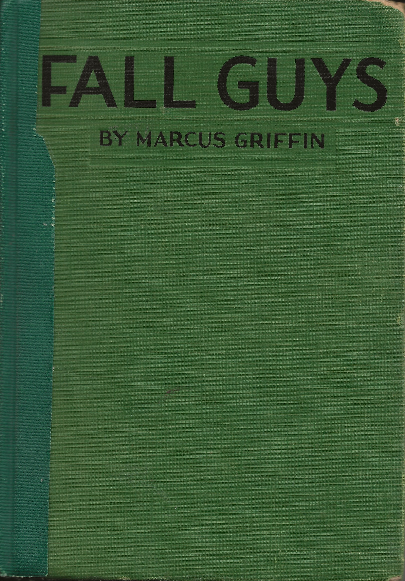
Marcus Griffin’s Fall Guys (1937) was the best book available on the history of professional …

I'm think I got this bookwyrm thing right. I ended up more-or-less manually importing ~1,000 books. I'm sure there is supposed to be any easier way.
I previously had accounts @fu@bookwyrm.social @fu@millefeuilles.cloud and @fu@bookwyrm.world, I think this one will be here to stay but I might need to find a less expensive hosting solution.
You can find my Pleroma account @hey@r.jimfulner.com
This link opens in a pop-up window
Marcus Griffin’s Fall Guys (1937) was the best book available on the history of professional …
Marcus Griffin’s Fall Guys (1937) was the best book available on the history of professional …
I have trouble putting into words just how much I enjoyed this book. One of the few I had been looking forward to reading for years that lived up to my own hype. returnreturnWritten in 1937, 11 years before the founding of the National Wrestling Alliance, Marcus Griffin set out to inform the public about the secret goings on in the world of professional wrestling, during a time that in many parts of the U.S. wrestling was more popular than baseball, and certainly other new forms of entertainment like pro football, and ice hockey. I wasn't, however, a "Hey, look these guys are fooling you!" it was more of a sneak behind the curtain, "Hey, look how neat this is." returnreturnI find it fascinating that so many people, of which only 2% where "hip" to wrestling's pre-determined nature, attended so many matches. Most of these matches sound absolutely boring by …
I have trouble putting into words just how much I enjoyed this book. One of the few I had been looking forward to reading for years that lived up to my own hype. returnreturnWritten in 1937, 11 years before the founding of the National Wrestling Alliance, Marcus Griffin set out to inform the public about the secret goings on in the world of professional wrestling, during a time that in many parts of the U.S. wrestling was more popular than baseball, and certainly other new forms of entertainment like pro football, and ice hockey. I wasn't, however, a "Hey, look these guys are fooling you!" it was more of a sneak behind the curtain, "Hey, look how neat this is." returnreturnI find it fascinating that so many people, of which only 2% where "hip" to wrestling's pre-determined nature, attended so many matches. Most of these matches sound absolutely boring by today's standards, with hour+ of rolling around on the mat. I found particularly interesting the tales of how they kept it above board, yet underground at the same time. They forbid spectators betting on wrestling matches, something very strange for the time, particularly as this was how boxing was run. This let them avoid a riot when someone learned it was "fixed" as had happened in boxing. Griffin only reveals one story where they got ran out of town on a rail, and that was more because the bout was so short people felt they didn't get their money's worth. returnreturnI really liked the story of the Boston promoter who specifically did start a riot. After running a few shows with less than 100 fans, he went and paid to print 100,000 free passes to a show with 10,00 seats available, and when the papers ran the story about thousands just trying to get in the papers knew they had better start covering these shows because clearly everyone in town wanted to see the results, yet no one was printing them. returnreturnI was also surprised by how many times the athletes and promoters agreed ahead of time that particular matches would be "shooting matches" where the winning was not predetermined and actual grappling determined a winner, often for a championship, that would go one and be defended "kayfabe" for years thereafter. Along with that I still don't see how a government organization, a state's athletic commission, actually determined who the worlds heavyweight champion was, but it did shed light on all these Wikipedia articles I've read about how someone was recognized in one state as the champion and not another. Griffin doesn't really make clear how much the athletic commissions where in on it, but I think that was kind of his point. returnreturnAbove all what I liked was Griffin's writing style. I don't have an estimate for how many different words and phrases he used "professional wrestler", like neckbender, mat hurdler, bonecrusher, etc., without ever actually saying pro wrestler or sports entertainer. The authentic old-timey-ness left a smile on my heart. returnreturnThis was certainly written for its time, aimed at early 20th century wrestling fans, evident by limited descriptions of various characters in the wrestling world at the time. Certainly, any fan in a big city would know who these people where, but alas, very few did I have any clear understanding. returnreturnPersonally, I'm going to buy a copy of the updated "annotated version" printed in the 2000s to my "Wishlist" to keep on my shelf and reference in any number of online wrestling flame wars that even my opponent will never read. I recommend anyone with even a cursory interest in pro wrestling to find a copy and read this.
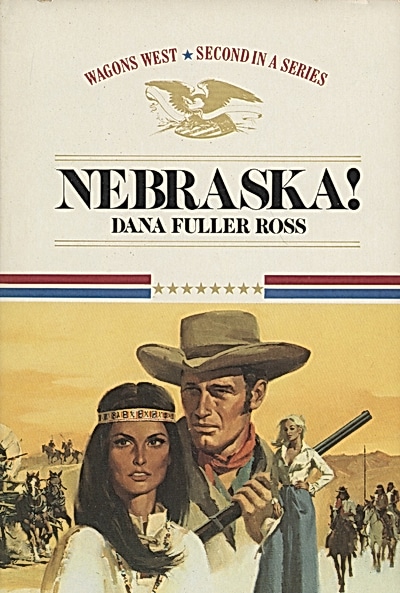
Nebraska I didn't think was quite as good as Independence but good enough to read the next one.
We are introduced to a number of new characters, my favorite of which is Hosea, an escaped slave who maintains much of his African heritage including running rather than horseback riding, shooting poisoned darts, utilizing a strong leather shield, and killing with tiny clubs.
As unbelievable as that sounds much of the rest is at least plausible. The wagon train spends the winter in a understaffed Army fort. They battle natives, each tribe more vicious the further west they travel. Folks get sick and tired of buffalo meat.
I had @Voice for android read me the eBook. I still think this is my preferred way to consume such medium, but I somehow lost my place near the end, and didn't quite get it right, all of a sudden there …
Nebraska I didn't think was quite as good as Independence but good enough to read the next one.
We are introduced to a number of new characters, my favorite of which is Hosea, an escaped slave who maintains much of his African heritage including running rather than horseback riding, shooting poisoned darts, utilizing a strong leather shield, and killing with tiny clubs.
As unbelievable as that sounds much of the rest is at least plausible. The wagon train spends the winter in a understaffed Army fort. They battle natives, each tribe more vicious the further west they travel. Folks get sick and tired of buffalo meat.
I had @Voice for android read me the eBook. I still think this is my preferred way to consume such medium, but I somehow lost my place near the end, and didn't quite get it right, all of a sudden there was a wedding of someone I thought were still at odds with each other. When I get to Wyoming! it's gonna be a dead tree for me.
I found particularly heart breaking the story of the southern belle who was kidnapped during an Indian raid at the behest of the British St. Clair, Her Majesty's spy.
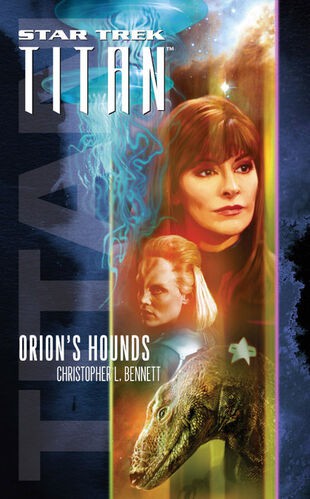
As the USS Titan ventures beyond the outermost reaches of known space, the telepaths in …
I really liked this book. It centers around the star-jellies that we were first introduced in TNG S1E1 at Farpoint station. If you can I would recommend watching that again before you read this.
I felt they did really good exploring modern day political issuea, like gun control and hunting rights, in a way that TNG failed to do as if all human issues were already solved.
There are still too many characters to keep them all straight even 3 books in, and the premise of just how many giant space monsters this area of space has is a little unbelievable preventing this from getting 5 stars.

Saint Macrina (327 - 370) was a major guiding force in the early development of …
On hold at the public library
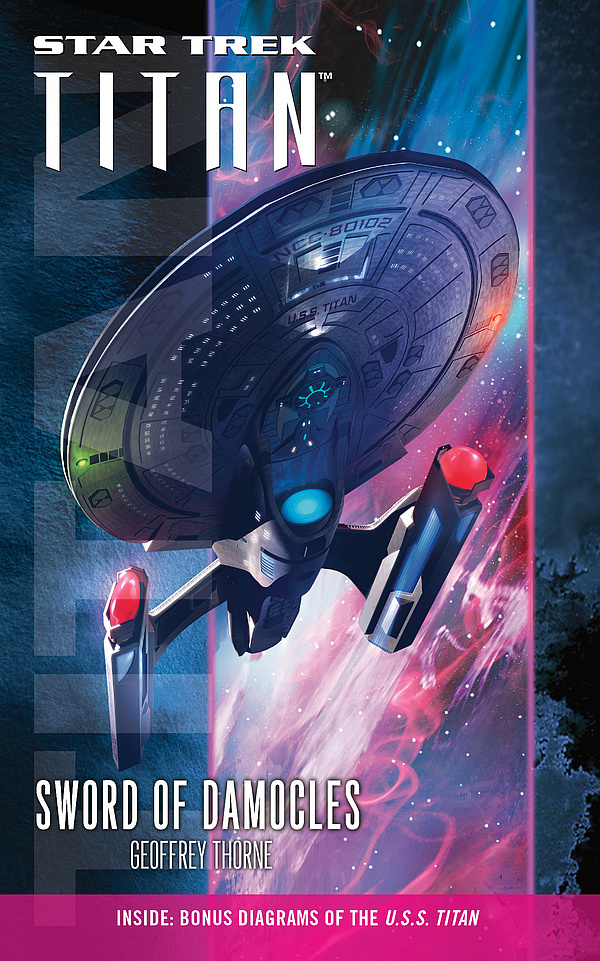
Fate: It is an idea as old as life itself. Do our choices shape the …
Put in an interlibrary loan request.
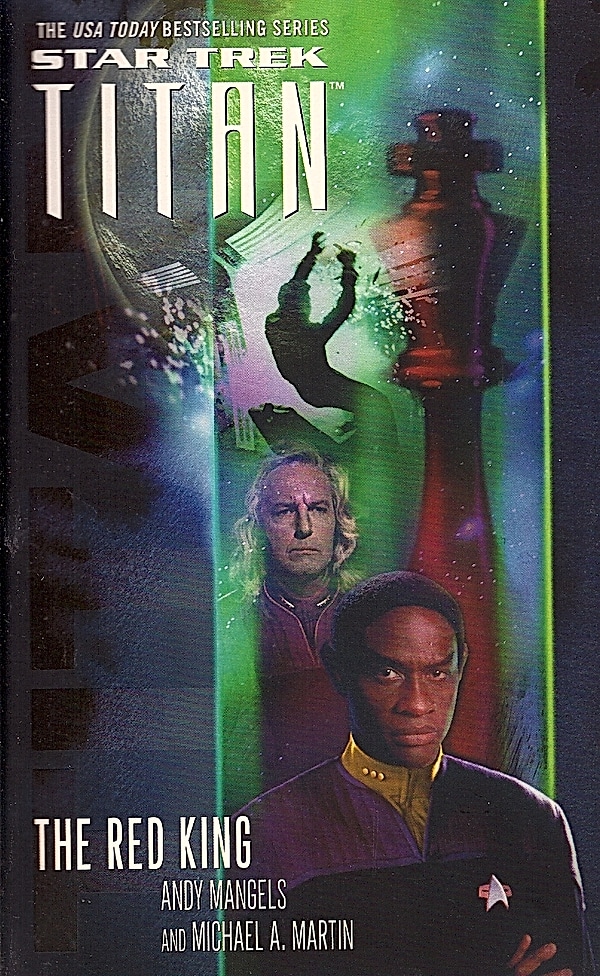
Investigating the disappearance of a secret Romulan fleet, the U.S.S. Titan, commanded by Captain William …
I really liked the story of the Red King, the 2nd book in the '00s Star Trek: Titan series. Captain Will Riker's ship the U.S.S. Titan attempts to help the Romulans look for a fleet that disappeared near the bloom in space caused by Shinzon's weapon at the end of the movie Nemesis. Only to get sucked in along with the Romulans and a Klingon ship that was potroling the area due to their alliance with the newly indpendent Reamans, to the Small Magellanic Cloud past the edge of our galaxy. There they find a group of pilgrims of an indigeouns religion seeking a god whose wakening from slumbar will destroy their colonists worlds, and them too.
Its the first Star Trek book I recall reading that introduced new (to me) scientific theories including protounivereses and emerging space.
I liked how they brought together the scientific theory, the …
I really liked the story of the Red King, the 2nd book in the '00s Star Trek: Titan series. Captain Will Riker's ship the U.S.S. Titan attempts to help the Romulans look for a fleet that disappeared near the bloom in space caused by Shinzon's weapon at the end of the movie Nemesis. Only to get sucked in along with the Romulans and a Klingon ship that was potroling the area due to their alliance with the newly indpendent Reamans, to the Small Magellanic Cloud past the edge of our galaxy. There they find a group of pilgrims of an indigeouns religion seeking a god whose wakening from slumbar will destroy their colonists worlds, and them too.
Its the first Star Trek book I recall reading that introduced new (to me) scientific theories including protounivereses and emerging space.
I liked how they brought together the scientific theory, the pilgrims' religious view of an omnipotent sleeper awakening and the Red King's dream of Alice in Wonderland.
I didn't like some of the writing. Namely I disliked the way the treated Counselor Troi as being far more telepathic than on TNG, including knowing peoples motives. I also found I had a hard time keeping track of so many new characters, most of which are also new species. I kept having to flip back to earlier chapters to recall who in the world this was who was talking.
With the good and the bad that gives me 3 stars.
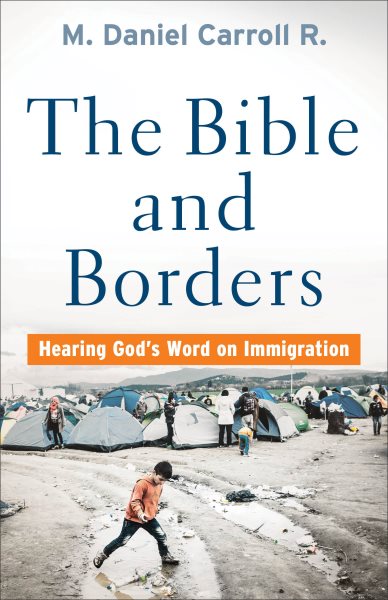
With so many people around the globe migrating, how should Christians and the church respond? …
I had really mixed feelings about this book. One the one hand it was incredibly well documented and spoke to where so many Christians are, including those currently or recently migrating. On the other hand whilst reading it was the first time I ever recall reading several pages and then realized I was thinking about something else completely the whole time I read it. I'm not sure how that's actually possible. It also has the same problem I see about many Christian works, even left leaning ones, that it just doesn't feel radical enough.returnreturnCarrol is a professor of Old Testament studies at a Christian university and it shows in his writing. Something like 3/4 of the book was the chapter on what the Old Testament says. That's unusual for a Christian book, but then again the Old Testament is 3/4 of the Bible. He shows all the people that were …
I had really mixed feelings about this book. One the one hand it was incredibly well documented and spoke to where so many Christians are, including those currently or recently migrating. On the other hand whilst reading it was the first time I ever recall reading several pages and then realized I was thinking about something else completely the whole time I read it. I'm not sure how that's actually possible. It also has the same problem I see about many Christian works, even left leaning ones, that it just doesn't feel radical enough.returnreturnCarrol is a professor of Old Testament studies at a Christian university and it shows in his writing. Something like 3/4 of the book was the chapter on what the Old Testament says. That's unusual for a Christian book, but then again the Old Testament is 3/4 of the Bible. He shows all the people that were forced to migrate both within a country and across borders. The reasons they moved were the same reasons people do today. All through the Bible God shows that His people are the ones on the move, and in the promised land they are supposed to care for those that are traveling or reside about you that are different. He does a good job arguing against the right-wing talking points, particularly those based on Romans 13.returnreturnI did have a hard time accepting some things, like how whilst a Christian can fight for 100% open borders, he doesn't have to. In particular I found frightening his statement in the intro that if you do identify the horrible treatment of immigrants in the U.S. Americans should still love their country, particularly as he doesn't expand on that in the rest of the book.returnreturnI identify that a lot of the problems I see here may well be problems with me and not with Mr. Carrol.
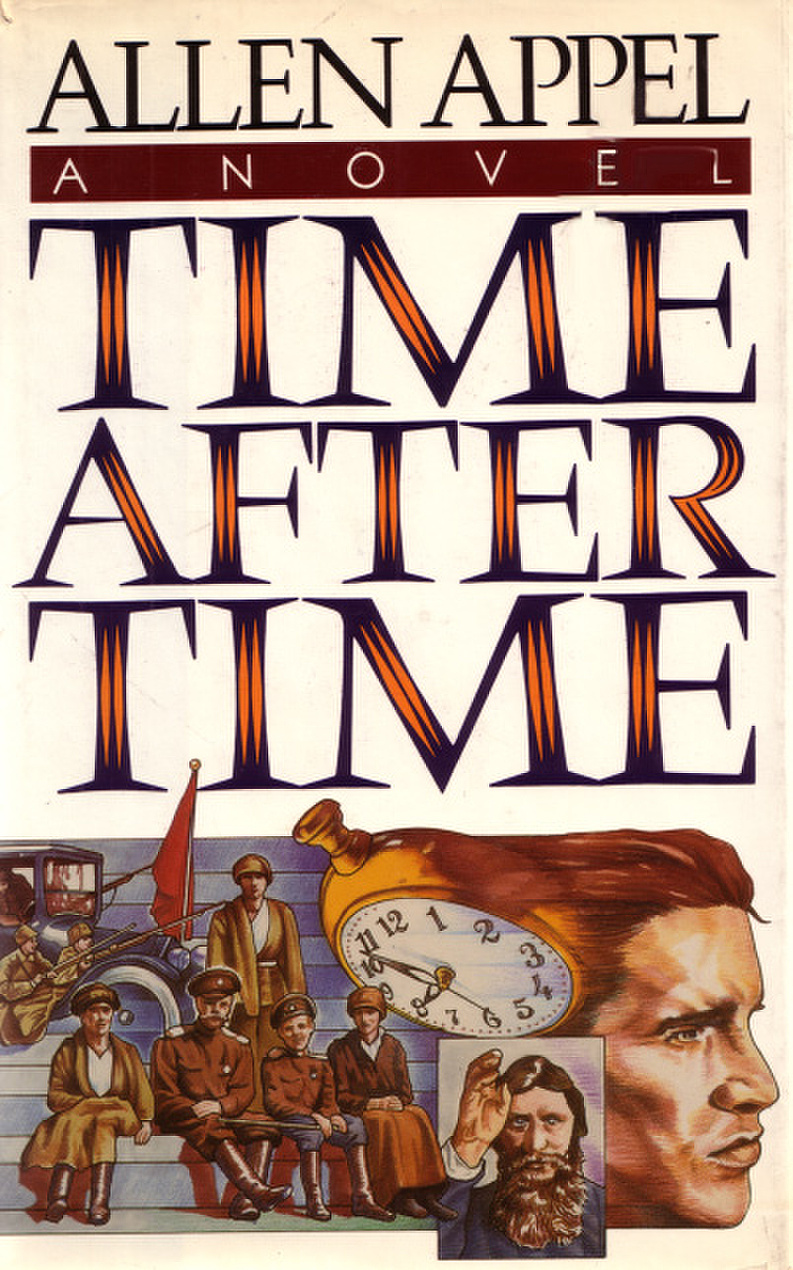
A JOURNEY OF TERROR THROUGH TIME..."Is Anastasia dead? History professor Alex Balfour confidently knew that …
I really liked it. It's the third fictional work on the Russian Revolution I have read in the last year or so. In some ways it is what I had wished The Time Traveler's Wife would have been.
A 1980s historian's ex-girlfriend walks in on his Russian history class. Afterward she strikes up the old romance. He keeps having very lucid dreams about being in the Russian Revolution himself. Later the dreams get more real, with mud on his shoes, dirty hair, etc.
Just as the gf is getting back with him, he shifts into the past for long term. Along the way he meets historical figures, his own father, goes through psychological torture, etc.
I like how Appel tells a story in several different time periods in a still linear pattern.
Like Blood Red Snow White this one was in the children's section of the …
I really liked it. It's the third fictional work on the Russian Revolution I have read in the last year or so. In some ways it is what I had wished The Time Traveler's Wife would have been.
A 1980s historian's ex-girlfriend walks in on his Russian history class. Afterward she strikes up the old romance. He keeps having very lucid dreams about being in the Russian Revolution himself. Later the dreams get more real, with mud on his shoes, dirty hair, etc.
Just as the gf is getting back with him, he shifts into the past for long term. Along the way he meets historical figures, his own father, goes through psychological torture, etc.
I like how Appel tells a story in several different time periods in a still linear pattern.
Like Blood Red Snow White this one was in the children's section of the library. It is even less appropriate for kids than that was. Quite possibly the most sex in a book I have ever read.
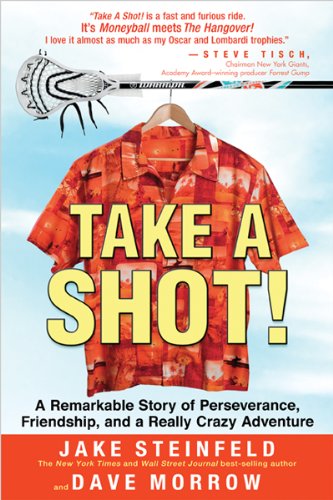
Take a Shot! is the incredible true story of how three unlikely partners--world-famous fitness icon …
I liked it. I really appreciate Lacrosse and it really was Major Leauge Lacrosse that got me most interested and I have found the most enjoyable version of the sport I've seen. This book is a short tale about how the Body-by-Jake-Guy started the league after reading a magazine article about Dave Marrow's lacrosse company Warrior in Spin magazine and finding his number and calling him, something Jake calls "dialing for dollars" to ask if there was a pro lacrosse league and when told know he responded WELL THERE IS NOW and took off on this new venture. Jake then goes on to tell us how it all happened and all of the characters he met along the way. Jake seems to be a true entrepreneur to the point that he named names of everyone who helped along the way and uses nicknames describe all the people who were hindrances …
I liked it. I really appreciate Lacrosse and it really was Major Leauge Lacrosse that got me most interested and I have found the most enjoyable version of the sport I've seen. This book is a short tale about how the Body-by-Jake-Guy started the league after reading a magazine article about Dave Marrow's lacrosse company Warrior in Spin magazine and finding his number and calling him, something Jake calls "dialing for dollars" to ask if there was a pro lacrosse league and when told know he responded WELL THERE IS NOW and took off on this new venture. Jake then goes on to tell us how it all happened and all of the characters he met along the way. Jake seems to be a true entrepreneur to the point that he named names of everyone who helped along the way and uses nicknames describe all the people who were hindrances so as to preserve the anonymity and avoid burning bridges. One example being "The Mad Man" a fat real estate investor from New York with kankles and felt everyone owed him everything and in a really weird way. I have hunch that might have been Donald Trump, if it was I'm somewhat surprised he already thought he was part of the police force in 2000.
Last year I finished up A life in Sports a biography of Lamar Hunt focuses primarily on his part in forming the American Football League, while also touching on forming MLS and professionalizing tennis. I was hoping to have more of that here. While I was somewhat surprised that Mr. Hunt makes an appearance here and has a small role in helping Major League Lacrosse start out the authorship leaves some lacking.
Clearly Mr. Steinfeld has written business books before and this frequently turns into one with the "no matter how many times you hear know you just have to keep asking people until someone says yes" kind of boring derivative nonsense. He also thinks awfully lot of himself, example of him saying that he always thinks about his family first, when three quarters of the way through the book he didn't even mention he had a family.
At times I felt like Jake had some sort of minimum page limit to reach with his publishers. In particular usually when two authors write one book sometimes, I'll see one author with one chapter and another with the other, or more often you can't easily tell which part each author wrote as it comes across as a single prose. However, in Take a Shot! every part that Dave Morrow wrote is included as a long quote, often pages at a time with paragraphs intended on both sides and everything.
While Take a Shot! was written in 2012, after the 10th anniversary of the league with smiles on everyone's face that MLL would be around for years to come, in hind site we know better. Since the authorship of this book MLL was downgraded from a professional to a semi-professional league and later merged with the Premier Lacrosse League (PLL) that has a business model more similar to what Jake and Dave ran as the MLL's "Summer Showcase" than the regular league that followed. Also interesting the last team they got to join the first season, the Boston Canons, because Jake didn't have high faith in them, is the only team that still exists in the PLL.
If you are interested in professional lacrosse its worth the read, as for the ins and outs of starting a professional sprots league A life in Sport is better, and there are tons of better business books.
Take a Shot! is the incredible true story of how three unlikely partners--world-famous fitness icon …
A JOURNEY OF TERROR THROUGH TIME..."Is Anastasia dead? History professor Alex Balfour confidently knew that …
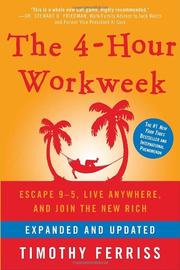
The 4-Hour Workweek: Escape 9–5, Live Anywhere, and Join the New Rich (2007) is a …
Another week 'till I get home and this is the only book I have left.
Another week 'till I get home and this is the only book I have left.
The 4-Hour Workweek: Escape 9–5, Live Anywhere, and Join the New Rich (2007) is a …
I listened to the Audiobook of the original version years ago. My wife bought me this dead tree expanded and updated version for Christmas as it was about the only book on my LibraryThing wishlist she could find at half-price books.
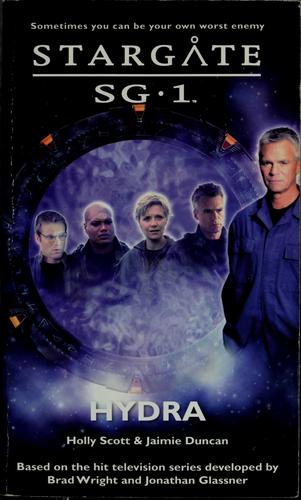
All new novel based on the hit TV series Stargate SG-1. Follow Colonel Jack O'Neill …
I liked it. In fact, I really loved the IDEA of this book. A group of robot duplicates of SG-1 employed by the NID to try to steal technology from worlds the SGC has said can't be done. There are like six different versions of these duplicates each with slightly modified code some work better than others, and one goes completely rouge. returnreturnThe execution, however, left me wanting. It got really confusing having several characters named "jack O'Neil" they tried to help you tell the difference, like Jackson Alpha, and Dan and one named O'Neil talking to another named Jack, but it wasn't consistent and I frequently forgot where I was, particularly with them switching time lines back and forth, I kept having to go back to the beginning of the chapter to find out where in time and space we were at. At least they had those clues built …
I liked it. In fact, I really loved the IDEA of this book. A group of robot duplicates of SG-1 employed by the NID to try to steal technology from worlds the SGC has said can't be done. There are like six different versions of these duplicates each with slightly modified code some work better than others, and one goes completely rouge. returnreturnThe execution, however, left me wanting. It got really confusing having several characters named "jack O'Neil" they tried to help you tell the difference, like Jackson Alpha, and Dan and one named O'Neil talking to another named Jack, but it wasn't consistent and I frequently forgot where I was, particularly with them switching time lines back and forth, I kept having to go back to the beginning of the chapter to find out where in time and space we were at. At least they had those clues built in. I thought it might make a good movie or T.V. episode, but I'm not sure how they'd do the ending in a way that would be both believable and not vomit inducing. Alas we'll never know.