



User Profile

Jim Fulner

re@d.jimfulner.com

Joined 4 months, 3 weeks ago

I'm think I got this bookwyrm thing right. I ended up more-or-less manually importing ~1,000 books. I'm sure there is supposed to be any easier way.

I previously had accounts @fu@bookwyrm.social @fu@millefeuilles.cloud and @fu@bookwyrm.world, I think this one will be here to stay but I might need to find a less expensive hosting solution.

You can find my Pleroma account @hey@r.jimfulner.com

This link opens in a pop-up window

Jim Fulner's books

Up Next (View all 9)

Currently Reading

2026 Reading Goal

76% complete! Jim Fulner has read 57 of 75 books.

started reading Veeck—As In Wreck by Bill Veeck
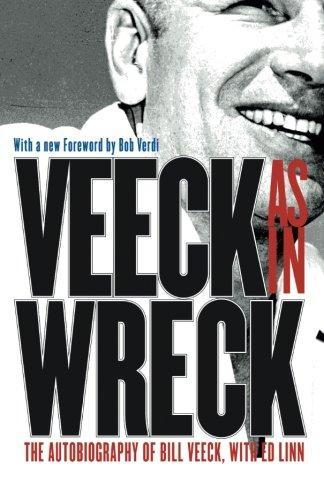
Bill Veeck, Ed Linn, Bob Verdi: Veeck—As In Wreck (2001, University of Chicago Press)

Bill Veeck was an inspired team builder, a consummate showman, and one of the greatest …

Having previously read his son Mike's autobiography, Fun is Good related to his time as owner of the St. Paul Saints, it's finally time to pick up daddy's, who spent time owning the Milwaukee Brewers, Cleveland Indians, Chicago White Sox, and St. Louis Browns. The first chapter is all about the time he put a midget up-to-bat in the big leagues.
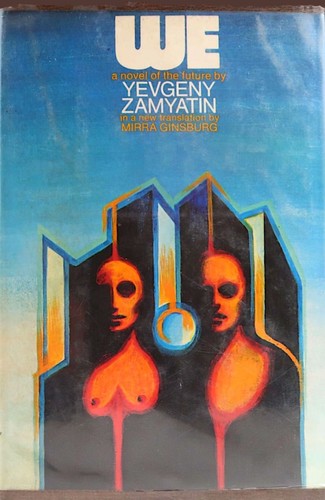
reviewed We by Yevgeny Zamyatin

Yevgeny Zamyatin: We (Hardcover, 1972, Viking Press)

We is set in the future. D-503, a spacecraft engineer, lives in the One State, …

One can never leave the One State.

I liked We, or at least I didn't NOT like it. I don't know, I might not be smart enough to understand Russian literature, even translated into my native tongue. The story is fine, a brilliant mathematician doing the work to design the spaceship that will bring organization and reason to planets beyond our imagination, but in the process meets a girl, its always a girl isn't it, who introduces freedom to his life and turns the world upside down.

I guess I really didn't like the love interest, this I-330 character, particularly as our protagonist D-503 had a fine familial triangle with O and R before she showed up like the little homewrecker, she is, How I can say that in a world that everyone is everyone else's property including the sexual use of whomever you please, as long as it's within the rhythms of her cycle, …

quoted We by Yevgeny Zamyatin

Yevgeny Zamyatin: We (Hardcover, 1972, Viking Press)

We is set in the future. D-503, a spacecraft engineer, lives in the One State, …

[I330 said,] "Who can tell? A human being is like a novel: until the last page you don't know how it will end. Or it wouldn't be worth reading . . . ."

— We by  (Page 141)

And yet this book gave spoilers to its end in its own introduction. I've too frequently found this an issue of reading re-releases of "classics."

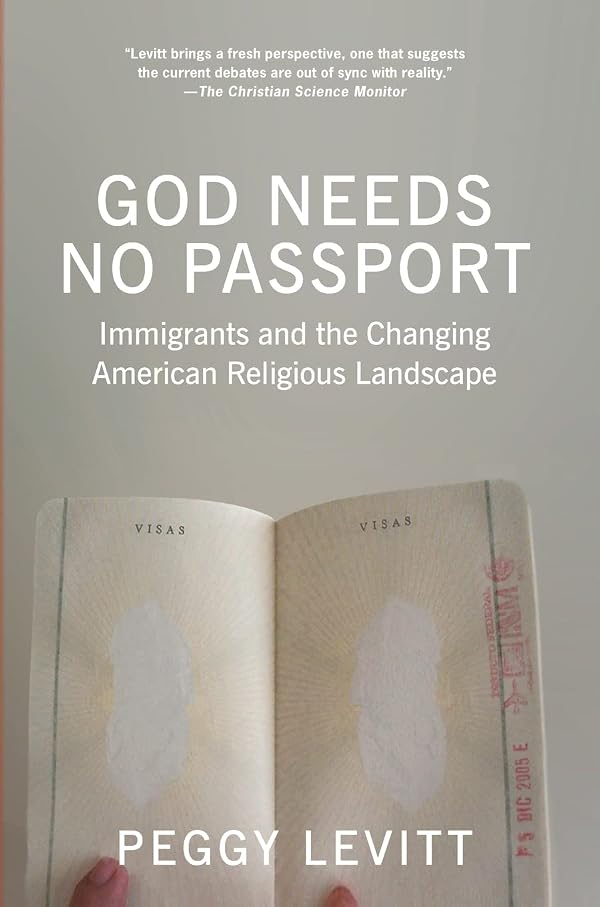
Peggy Levitt: God Needs No Passport (Hardcover, 2007, W.W. Norton & Co.)

While many Americans expect that immigrants will trade in one membership card for another, God …

Transnationalism is A.O.K.

God Needs No Passport wasn't quite what I was expecting. I would say this book is more about transnationalism in general than the American religious landscape. Levitt uses Boston, MA as a case study for all of the United States and interviews over 200 people from four different immigrant communities India (Hindu), Pakistan (Muslim), Ireland (Catholic), & Brazil (Christian, primarily Pentecostal). She also goes through a number of native-born Americans and their position on religion, particularly of new arrivals, ranging from the evangelical anti-religious, to the as long as they are the right kind of religion, to everyone is part of our melting pot. Similarly, she finds several different groups of believers among her immigrant interviewees, the most disturbing of which I found to be the "golden rulers" who have "studied all the religions" and found them all to teach basically the same thing. Thankfully Levitt does point out that …

Alfred Michael Downes: Fire Fighters and Their Pets (Paperback, 2022, Creative Media Partners, LLC)

Fire fighters and Their Pets is written by Alfred M. Downes, secretary of the New …

Originally added to my queue when it was referenced. In the biography of Blessed Michael J. McGivney's biography. I don't even remebers what the conection was now.

This is a photo intensive essay on the lives of New York City firefighters around the turn of the 20th century.

replied to Gersande La Flèche's status

@gersande@millefeuilles.cloud so many Americans try to paint modern immigrants as somehow different from their own ancestors. The fact so many keep ties to home and a portion even move back is part of their argument to keep new Americans as "other" but ta-dah even back when travel and communicating were much more difficult they were still doing it. It's just normal and it's part of being American.

Peggy Levitt: God Needs No Passport (Hardcover, 2007, W.W. Norton & Co.)

While many Americans expect that immigrants will trade in one membership card for another, God …

Between 1880 and 1920, an estimated one-quarter to one-third of all immigrants repatriated.

— God Needs No Passport by  (Page 28)

Now that's something they didn't teach us in school.

Peggy Levitt: God Needs No Passport (Hardcover, 2007, W.W. Norton & Co.)

While many Americans expect that immigrants will trade in one membership card for another, God …

"America, you know," says Kudret, a Pakistani immigrant in her forties, "is the most Muslim country in the world. Everyone has enough to eat and a roof over their head. This is directly in line with Muslim teachings. You cannot say that about Pakistan where Muslim laws are broken every day because of the poverty."

— God Needs No Passport by  (Page 86)

Well, I never expected to read that.