Jim Fulner wants to read Memoirs by Mikhail Gorbachev
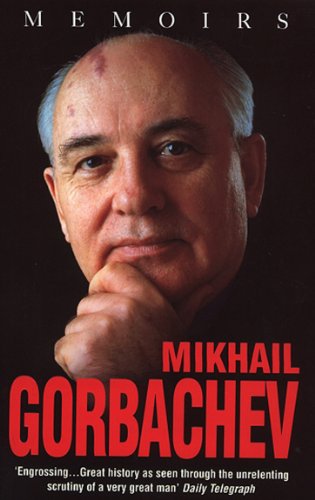
Memoirs by Mikhail Gorbachev
In these long-awaited memoirs, Mikhail Gorbachev looks back on a lifetime that mirrors the fate of the Russian people. From …

I'm think I got this bookwyrm thing right. I ended up more-or-less manually importing ~1,000 books. I'm sure there is supposed to be any easier way.
I previously had accounts @fu@bookwyrm.social @fu@millefeuilles.cloud and @fu@bookwyrm.world, I think this one will be here to stay but I might need to find a less expensive hosting solution.
You can find my Pleroma account @hey@r.jimfulner.com
This link opens in a pop-up window
76% complete! Jim Fulner has read 57 of 75 books.
In these long-awaited memoirs, Mikhail Gorbachev looks back on a lifetime that mirrors the fate of the Russian people. From …
Recounts the events of Reagan's historic, three-day 1988 Moscow Summit with Soviet leader Mikhail Gorbachev, examining the importance of Reagan's …
@morlock@bookwyrm.social saw this and thought of you betsy-tacysociety.org/
Can a robot survive in the wilderness? When robot Roz opens her eyes for the first time, she discovers that …
Can a robot survive in the wilderness? When robot Roz opens her eyes for the …
I thought the movie was actually better than the book. So I recommend reading the book first if you can in a way then you can enjoy both.
There is less violence and conflict in the book than in the film, so my wife who disliked that in the film may prefer the book here. I'll probably listen to the second one if I can find it on CD, but probably won't spend my own time.
I think it would be a good "chapter book" to read to young readers, unfortunately neither of my kids are ever down for that. Similar stories like Charlottes Web and Stuart Little being read to me by my mom are great memories to this day.
I thought the movie was actually better than the book. So I recommend reading the book first if you can in a way then you can enjoy both.
There is less violence and conflict in the book than in the film, so my wife who disliked that in the film may prefer the book here. I'll probably listen to the second one if I can find it on CD, but probably won't spend my own time.
I think it would be a good "chapter book" to read to young readers, unfortunately neither of my kids are ever down for that. Similar stories like Charlottes Web and Stuart Little being read to me by my mom are great memories to this day.
As the Federation recovers from the devastating events of Star Trek: Destiny, Captain William Riker …
My mom got me it for my birthday
The discipline of economics is not what it used to be. Over the last few …
I didn't like From Poverty to Prosperity. The description sounded awesome, like these economists unlocked the secret to get economies rolling that wasn't limited to the old ideas of lower taxes and more favorable business climates. But they didn't. Pretty much everything they talked as if it was brand new discoveries, in 2009, where stuff we had talked about in my undergraduate political science courses (circa 2005). It really took a while for it to go anywhere, in a year where I have been getting a book read a week, this less than 300 pages took my 8 weeks to slog through.
Their ideas about "weak property rights" that included more coverage, for shorter periods of time, for intellectual property were weird. I felt most of the points they made would actually be better reference points to why there should be 0 protections to intellectual property.
I …
I didn't like From Poverty to Prosperity. The description sounded awesome, like these economists unlocked the secret to get economies rolling that wasn't limited to the old ideas of lower taxes and more favorable business climates. But they didn't. Pretty much everything they talked as if it was brand new discoveries, in 2009, where stuff we had talked about in my undergraduate political science courses (circa 2005). It really took a while for it to go anywhere, in a year where I have been getting a book read a week, this less than 300 pages took my 8 weeks to slog through.
Their ideas about "weak property rights" that included more coverage, for shorter periods of time, for intellectual property were weird. I felt most of the points they made would actually be better reference points to why there should be 0 protections to intellectual property.
I agree with other reviewers on LibraryThing that the interviews they included where much better than the "new content" which was mostly just a strange stretch for unnecessarily forcing economic thought into software development language, particularly as it sounds like neither author has ever been a developer. That being said even the interviews were kind of weird, questions worded in such a way that they would get the answers they wanted and when they didn't, they tried to ask it differently to get it the way they wanted. Why you would do that and still publish the first part is even weirder to me.
Lastly the book just kind of ends with the interview with William Baumol. There is no summary chapter, no conclusions, like a kid whose term-paper is due at midnight.
@ERBeckman@bookwyrm.social what's it about, the name sounds super racist?
@ERBeckman@bookwyrm.social what's it about, the name sounds super racist?
The discipline of economics is not what it used to be. Over the last few decades, economists have begun a …
The discipline of economics is not what it used to be. Over the last few decades, economists have begun a …
This classic of Christian devotional literature has brought understanding and comfort to millions for centuries. Both Protestants and Catholics - …
This classic of Christian devotional literature has brought understanding and comfort to millions for centuries. …
A devotional from the 15th century that was too deep for me. It is considered incredibly inspirational in all the daily devotions that are very popular nowadays.
Russell Means was the most controversial American Indian leader of our time, and in Where White Men Fear to Tread, …
Russell Means was the most controversial American Indian leader of our time, and in Where …
Means could have used a better copy editor. Though from the stories he told, he's one stubborn SOB, the publisher probably tried to real him in and this is the best they got. I tried reading the dead tree version, but kept getting lost, and eventually borrowed the audio book version. This is one that i wish the book was the abridged and give me the unabridged audio book.
However, that being said, Russel Mean's story, of first trying to fight against his heritage, seeing what government handouts, had done to the family, and then later fighting for the true nature of being an Indian left nothing to the imagination.
The successes they had in the 1970s, even the violent struggles, almost makes me wish my family wanted to be AIM members in 2014.
Though I learned that there is reason why The American Indian Movement is …
Means could have used a better copy editor. Though from the stories he told, he's one stubborn SOB, the publisher probably tried to real him in and this is the best they got. I tried reading the dead tree version, but kept getting lost, and eventually borrowed the audio book version. This is one that i wish the book was the abridged and give me the unabridged audio book.
However, that being said, Russel Mean's story, of first trying to fight against his heritage, seeing what government handouts, had done to the family, and then later fighting for the true nature of being an Indian left nothing to the imagination.
The successes they had in the 1970s, even the violent struggles, almost makes me wish my family wanted to be AIM members in 2014.
Though I learned that there is reason why The American Indian Movement is practically non-existent. Like many small organizations it became place for internally bickering, and like places that promote violence for change, they can be very successful, but the change is not lasting. Non-violence is the future. Russel Means was a great individual, and I feel like less of a person for not taking the opportunity to meet him when I could.
Russell Means was the most controversial American Indian leader of our time, and in Where White Men Fear to Tread, …