for most of us, solitude is longed for, cherished, a rare opportunity to reflect on memories
Most people? That sounds like complete and utter craziness to me.
I'm think I got this bookwyrm thing right. I ended up more-or-less manually importing ~1,000 books. I'm sure there is supposed to be any easier way.
I previously had accounts @fu@bookwyrm.social @fu@millefeuilles.cloud and @fu@bookwyrm.world, I think this one will be here to stay but I might need to find a less expensive hosting solution.
You can find my Pleroma account @hey@r.jimfulner.com
This link opens in a pop-up window
76% complete! Jim Fulner has read 57 of 75 books.
for most of us, solitude is longed for, cherished, a rare opportunity to reflect on memories
Most people? That sounds like complete and utter craziness to me.
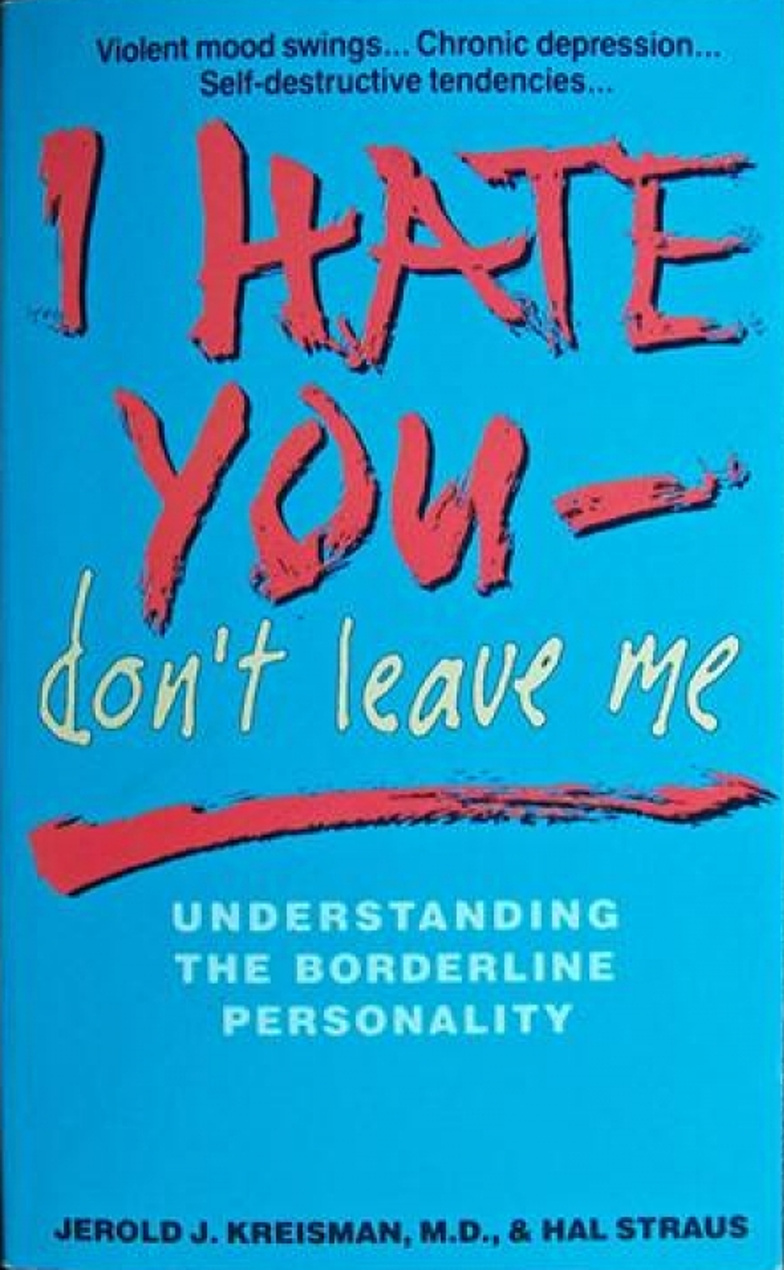
DSM-III-R lists eight criteria for BPD, five of which must be present for diagnosis. At first glance, these criteria may seem unconnected or only peripherally related. When explored in-depth, however, the eight symptoms are seen to be intricately connected, interacting with each other so that one symptom sparks the rise of another like the pistons of a combustion engine. The eight criteria may be summarized as follows: (1) Unstable and intense interpersonal relationships. (2) Impulsiveness in potentially self-damaging behaviors, such as substance abuse, sex, shoplifting, reckless driving, bìnge eating. (3) Severe mood shifts. (4) Frequent and inappropriate displays of anger. (5) Recurrent suicidal threats or gestures, or self-mutilating behaviors. (6) Lack of clear sense of identity. (7) Chronic feelings of emptiness or boredom. (8) Frantic efforts to avoid real or imagined abandonment.
Hmm you need 5 of 8 to be BORDERLINE? What if I have all eight?
Unable to tolerate paradox, borderlines are waking paradoxes, human Catch-22s
Uhm, why you in my head?
Well, I couldn't find my copy of The Ford-Wyoming Drive-In so let us pull this off the shelf and dig into what's wrong with me instead.
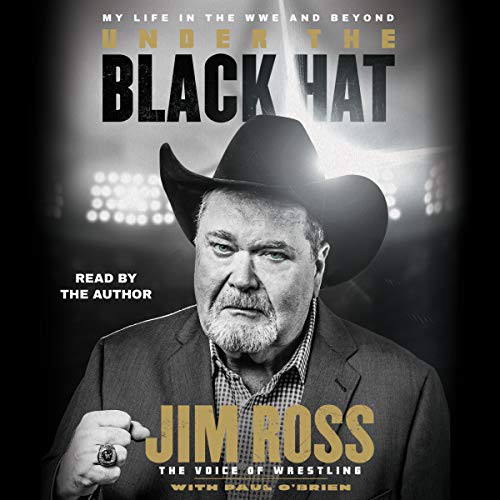
I Feel like I've already listened to this audiobook, but I can find no record of it on Bookwyrm nor LibraryThing. Maybe I only listened to his first book Slobberknocker: My Life in Wrestling? I also can't currently find the CDs, so maybe I already donated it to the little library at the beach?
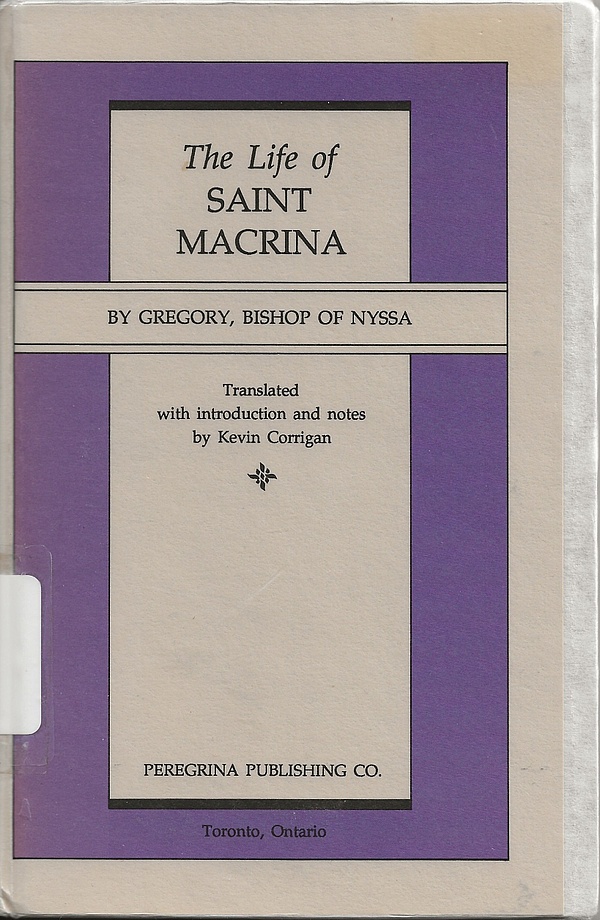
St. Gregory of Nyssia writes a short biographical letter to his friend of the life of his sister St. Macrina. Most of what Mr. Corrigan wrote in the introduction is repeated in the tale. Her own tumor was healed by her mother when she did as was requested and the eye infection of an infant was healed after spending dinner with St. Macrina. It was somewhat unusual that after her husband died at a young age, she spent the rest of her mother's days never ought of her site. Nearly as much is written of her funeral as of her life.
I really liked The Rambling Kid even if it wasn't what I was expecting. When I heard "A novel about the IWW" I was hoping for a story where we won, where wobbles successfully seized the means of production whilst bringing about a new world inside the shell of the old, even if in only a small part of the world. Alas what I got was a story that very well could have been a true story. Ashleigh even made frequent references to the Wobblies sometimes being too high on expectations and theory perhaps too dogmatic, for what the working-class needed, all while being the best thing they had.returnreturnBut the book wasn't all gloom and doom. We follow the life of Joe who goes from a boy in London, England, to a farmer in the Dakotas. Straight thru Ellis Island to the prairies of the Scandinavian immigrants. The farm goes …
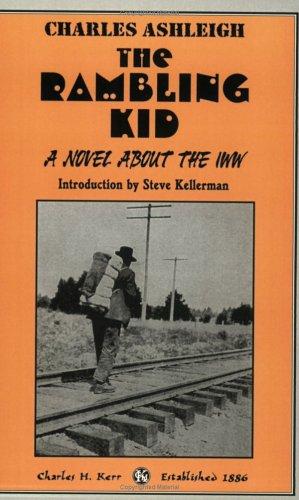
I really liked The Rambling Kid even if it wasn't what I was expecting. When I heard "A novel about the IWW" I was hoping for a story where we won, where wobbles successfully seized the means of production whilst bringing about a new world inside the shell of the old, even if in only a small part of the world. Alas what I got was a story that very well could have been a true story. Ashleigh even made frequent references to the Wobblies sometimes being too high on expectations and theory perhaps too dogmatic, for what the working-class needed, all while being the best thing they had.returnreturnBut the book wasn't all gloom and doom. We follow the life of Joe who goes from a boy in London, England, to a farmer in the Dakotas. Straight thru Ellis Island to the prairies of the Scandinavian immigrants. The farm goes bankrupt and off to the Twin Cities they go. Joe joins the Wobblies for a good time and a good job and then hops the trains like a hobo. He falls in love, possibly more than once. Charged with a crime he didn't commit and becomes a spokesman for the movement.returnreturnSo all-in-all still good fun while also have quite a bit of true working-class grit. Recommended to any Fellow Worker, whether or not they've joined the One Big Union.
I have trouble putting into words just how much I enjoyed this book. One of the few I had been looking forward to reading for years that lived up to my own hype.
Written in 1937, 11 years before the founding of the National Wrestling Alliance, Marcus Griffin set out to inform the public about the secret goings on in the world of professional wrestling, during a time that in many parts of the U.S. wrestling was more popular than baseball, and certainly other new forms of entertainment like pro football, and ice hockey. I wasn't, however, a "Hey, look these guys are fooling you!" it was more of a sneak behind the curtain, "Hey, look how neat this is."
I find it fascinating that so many people attended so many matches, most of which sound absolutely boring by today's standards, with hour+ of rolling around on the …
I have trouble putting into words just how much I enjoyed this book. One of the few I had been looking forward to reading for years that lived up to my own hype.
Written in 1937, 11 years before the founding of the National Wrestling Alliance, Marcus Griffin set out to inform the public about the secret goings on in the world of professional wrestling, during a time that in many parts of the U.S. wrestling was more popular than baseball, and certainly other new forms of entertainment like pro football, and ice hockey. I wasn't, however, a "Hey, look these guys are fooling you!" it was more of a sneak behind the curtain, "Hey, look how neat this is."
I find it fascinating that so many people attended so many matches, most of which sound absolutely boring by today's standards, with hour+ of rolling around on the mat. I found particularly interesting the tales of how they kept it above board, yet underground at the same time. They forbid spectators betting on wrestling matches, something very strange for the time, particularly as this was how boxing was run. This let them avoid a riot when someone learned it was "fixed" as had happened in boxing. Griffin only reveals one story where they got ran out of town on a rail, and that was more because the bout was so short people felt they didn't get their money's worth.
I really liked the story of the Boston promoter who specifically did start a riot. After running a few shows with less than 100 fans, he went and paid to print 100,000 free passes to a show with 10,00 seats available, and when the papers ran the story about thousands just trying to get in the papers knew they had better start covering these shows because clearly everyone in town wanted to see the results, yet no one was printing them.
I was also surprised by how many times the athletes and promoters agreed ahead of time that particular matches would be "shooting matches" where the winning was not predetermined and actual grappling determined a winner, often for a championship, that would go one and be defended "kayfabe" for years thereafter. Along with that I still don't see how a government organization, a state's athletic commission, actually determined who the worlds heavyweight champion was, but it did shed light on all these Wikipedia articles I've read about how someone was recognized in one state as the champion and not another. Griffin doesn't really make clear how much the athletic commissions where in on it, but I think that was kind of his point.
Above all what I liked was Griffin's writing style. I don't have an estimate for how many different words and phrases he used "professional wrestler", like neckbender, mat hurdler, bonecrusher, etc., without ever actually saying pro wrestler or sports entertainer. The authentic old-timey-ness left a smile on my heart.
This was certainly written for its time, aimed at early 20th century wrestling fans, evident by limited descriptions of various characters in the wrestling world at the time. Certainly, any fan in a big city would know who these people where, but alas, very few did I have any clear understanding.
Personally, I'm going to buy a copy of the updated "annotated version" printed in the 2000s to my "Wishlist" to keep on my shelf and reference in any number of online wrestling flame wars that even my opponent will never read. I recommend anyone with even a cursory interest in pro wrestling to find a copy and read this.

Ninety-eight percent of those who pay their money to witness these gymnastic dramas and comedies believe it's on the level.
In a book full of great stories, insights, behind the scenes journalism and folksy tales, this line stood out to me as the sum of what was early 20th century professional wrestling. Eighty-nine years later it is hard to wrap my head around a Madison Square Garden of 19,000 fans had less than 40 of them who understood the matches were predetermined. Clearly it had to be that way at some point if they didn't come out and say it until my lifetime, but "everyone" knew it way before then.
I have trouble putting into words just how much I enjoyed this book. One of the few I had been looking forward to reading for years that lived up to my own hype. returnreturnWritten in 1937, 11 years before the founding of the National Wrestling Alliance, Marcus Griffin set out to inform the public about the secret goings on in the world of professional wrestling, during a time that in many parts of the U.S. wrestling was more popular than baseball, and certainly other new forms of entertainment like pro football, and ice hockey. I wasn't, however, a "Hey, look these guys are fooling you!" it was more of a sneak behind the curtain, "Hey, look how neat this is." returnreturnI find it fascinating that so many people, of which only 2% where "hip" to wrestling's pre-determined nature, attended so many matches. Most of these matches sound absolutely boring by …
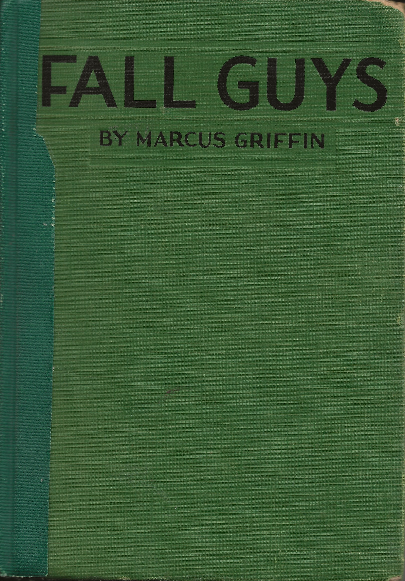
I have trouble putting into words just how much I enjoyed this book. One of the few I had been looking forward to reading for years that lived up to my own hype. returnreturnWritten in 1937, 11 years before the founding of the National Wrestling Alliance, Marcus Griffin set out to inform the public about the secret goings on in the world of professional wrestling, during a time that in many parts of the U.S. wrestling was more popular than baseball, and certainly other new forms of entertainment like pro football, and ice hockey. I wasn't, however, a "Hey, look these guys are fooling you!" it was more of a sneak behind the curtain, "Hey, look how neat this is." returnreturnI find it fascinating that so many people, of which only 2% where "hip" to wrestling's pre-determined nature, attended so many matches. Most of these matches sound absolutely boring by today's standards, with hour+ of rolling around on the mat. I found particularly interesting the tales of how they kept it above board, yet underground at the same time. They forbid spectators betting on wrestling matches, something very strange for the time, particularly as this was how boxing was run. This let them avoid a riot when someone learned it was "fixed" as had happened in boxing. Griffin only reveals one story where they got ran out of town on a rail, and that was more because the bout was so short people felt they didn't get their money's worth. returnreturnI really liked the story of the Boston promoter who specifically did start a riot. After running a few shows with less than 100 fans, he went and paid to print 100,000 free passes to a show with 10,00 seats available, and when the papers ran the story about thousands just trying to get in the papers knew they had better start covering these shows because clearly everyone in town wanted to see the results, yet no one was printing them. returnreturnI was also surprised by how many times the athletes and promoters agreed ahead of time that particular matches would be "shooting matches" where the winning was not predetermined and actual grappling determined a winner, often for a championship, that would go one and be defended "kayfabe" for years thereafter. Along with that I still don't see how a government organization, a state's athletic commission, actually determined who the worlds heavyweight champion was, but it did shed light on all these Wikipedia articles I've read about how someone was recognized in one state as the champion and not another. Griffin doesn't really make clear how much the athletic commissions where in on it, but I think that was kind of his point. returnreturnAbove all what I liked was Griffin's writing style. I don't have an estimate for how many different words and phrases he used "professional wrestler", like neckbender, mat hurdler, bonecrusher, etc., without ever actually saying pro wrestler or sports entertainer. The authentic old-timey-ness left a smile on my heart. returnreturnThis was certainly written for its time, aimed at early 20th century wrestling fans, evident by limited descriptions of various characters in the wrestling world at the time. Certainly, any fan in a big city would know who these people where, but alas, very few did I have any clear understanding. returnreturnPersonally, I'm going to buy a copy of the updated "annotated version" printed in the 2000s to my "Wishlist" to keep on my shelf and reference in any number of online wrestling flame wars that even my opponent will never read. I recommend anyone with even a cursory interest in pro wrestling to find a copy and read this.