Jim Fulner rated Following Francis: 5 stars
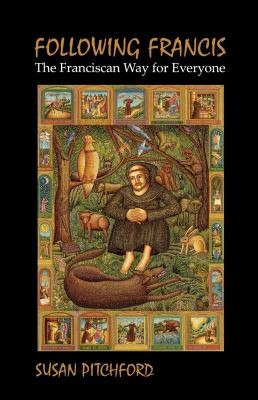
Following Francis by Susan Pitchford
n a little town in Italy, nearly eight hundred years ago, Francis of Assisi renounced everything he owned to follow …

I'm think I got this bookwyrm thing right. I ended up more-or-less manually importing ~1,000 books. I'm sure there is supposed to be any easier way.
I previously had accounts @fu@bookwyrm.social @fu@millefeuilles.cloud and @fu@bookwyrm.world, I think this one will be here to stay but I might need to find a less expensive hosting solution.
You can find my Pleroma account @hey@r.jimfulner.com
This link opens in a pop-up window
n a little town in Italy, nearly eight hundred years ago, Francis of Assisi renounced everything he owned to follow …

The whens, hows and whys of keeping order. Robert's Rules have long been the ultimate guide for running meetings and …

The only way to undo racism is to consistently identify and describe it—and then dismantle …
Put on hold at the library
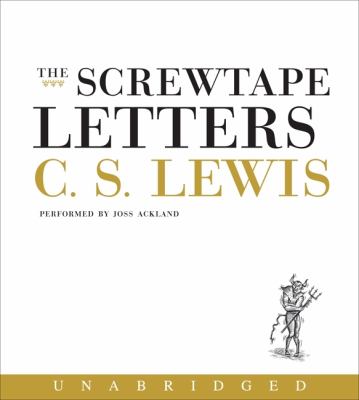
A milestone in the history of popular theology, The Screwtape Letters is an iconic classic …
This audiobook was great. An incredibly interesting and engaging way to teach theology. Made me think a lot and realize just how messed up my relationship with Jesus has become. Joss Auckland did a fantastic job playing the voice of Screwtape. Super spooky. This is the second audiobook that I've put the dead tree version on my wishlist before I finished it. Devine Conspiracy being the other. I recommend to any Christian.
This audiobook was great. An incredibly interesting and engaging way to teach theology. Made me think a lot and realize just how messed up my relationship with Jesus has become. Joss Auckland did a fantastic job playing the voice of Screwtape. Super spooky. This is the second audiobook that I've put the dead tree version on my wishlist before I finished it. Devine Conspiracy being the other. I recommend to any Christian.
In May 2016, Thomas Jay Rush watched the impossible happen: a startup with no CEO, …
Not a Bitcoin Boi, but not a naysayer either

Reflecting on an outstanding 19-year major-league career, this autobiography chronicles baseball great Ken Griffey, beginning …
One of the only games I distinctly remember was watching on T.V. the first time Ken Griffey Sr., & Jr. played on the same team. "The first father-son game of catch during an MLB game" Let's see what else he has to say.
One of the only games I distinctly remember was watching on T.V. the first time Ken Griffey Sr., & Jr. played on the same team. "The first father-son game of catch during an MLB game" Let's see what else he has to say.
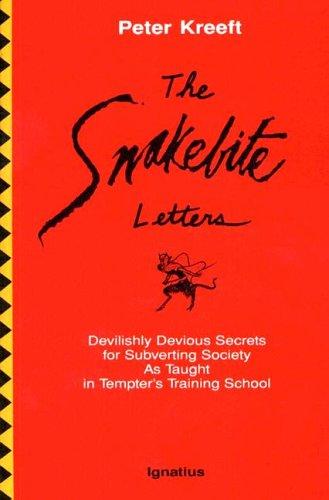
Taking his cue from the new literary genre invented by C. S. Lewis in Screwtape …
I'm enjoying The Screwtape Letters, written by a mid-20th century Protestant aimed at the Brits of the time, I figured I'd add to my queue this take on the genre, written by a late-20th century Catholic aimed at the Americans of our times.
I'm enjoying The Screwtape Letters, written by a mid-20th century Protestant aimed at the Brits of the time, I figured I'd add to my queue this take on the genre, written by a late-20th century Catholic aimed at the Americans of our times.
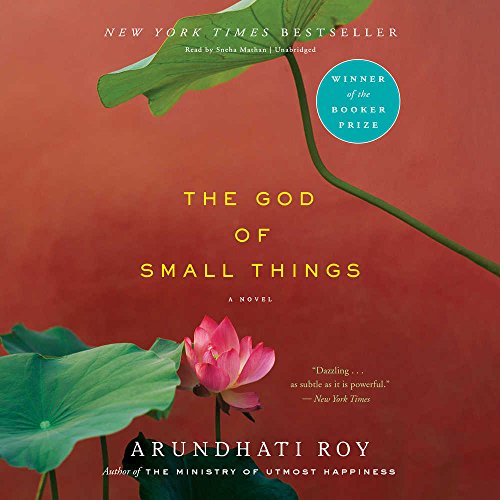
The God of Small Things is the 1997 debut novel written by Indian author Arundhati …
I've been trying to slog throw listening to The God of Small Things and I'm finding it awful boring. I know it's a Booker prize winner and I know a lot of folks on LibraryThing take the booker prize as absolute gospel and base there to-be-read list larging on its nominees. Similarly, earlier this week on was on the work page for The God of Small Things on LibraryThing and there were some recommendations on there that immediately I thumbed down, Midnight's Children (another Booker winner) and To Kill a Mockingbird (a Pulitzer Prize winner) because I thought both of those were awful boring, the first was so bad I didn't finish it and the second I only read it because school made me. Then I went and changed to an upvote because if you liked one boring book you may well like others.
Perhaps the Booker and Pulitzer …
I've been trying to slog throw listening to The God of Small Things and I'm finding it awful boring. I know it's a Booker prize winner and I know a lot of folks on LibraryThing take the booker prize as absolute gospel and base there to-be-read list larging on its nominees. Similarly, earlier this week on was on the work page for The God of Small Things on LibraryThing and there were some recommendations on there that immediately I thumbed down, Midnight's Children (another Booker winner) and To Kill a Mockingbird (a Pulitzer Prize winner) because I thought both of those were awful boring, the first was so bad I didn't finish it and the second I only read it because school made me. Then I went and changed to an upvote because if you liked one boring book you may well like others.
Perhaps the Booker and Pulitzer Prizes are for the most well written boring book of the year?
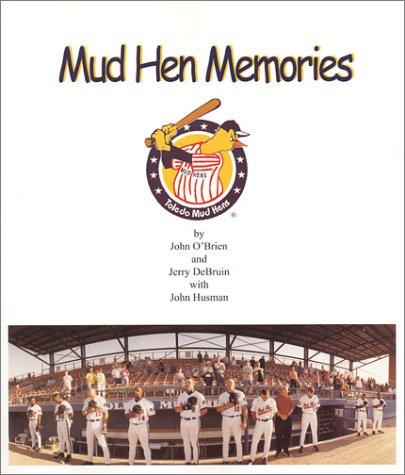
Local authors and long time Mud Hen fans Jerry DeBruin and John O'Brien with Mud …
Putting some more minor league ball in the library book queue.
A milestone in the history of popular theology, The Screwtape Letters is an iconic classic …
Wow it's every better than I hoped, if a bit raw as I see far too much of myself i in the patient.
Wow it's every better than I hoped, if a bit raw as I see far too much of myself i in the patient.
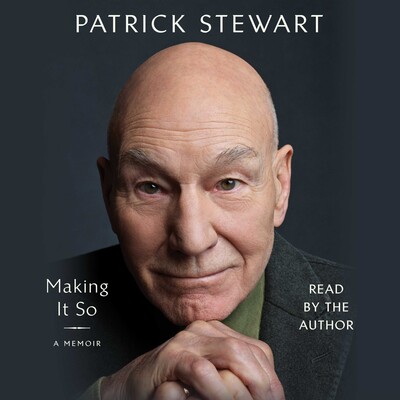
From his acclaimed stage triumphs to his legendary onscreen work in the Star Trek and …
I was disappointed in Making it so. More so I was disappointed that I was disappointed in it, and particularly I was disappointed by Stewart as a person. The book was well written, as far as any actor's autobiography would be. I liked the stories of his early life growing up in the north of England—having to read books in the outhouse and draining the bathtub with his mouth. But I didn't like learning how self-centered he was. Like telling us every detail of a Shakespeare tour I could not care less about, and then casually mentioning he had had a kid "by this time Daniel was already born, maybe 2 or 3"
And I leaned he's had three different wives, twice he got bored living away from his wife by himself while on acting gigs so he cheated on her and divorced her when he got caught. …
I was disappointed in Making it so. More so I was disappointed that I was disappointed in it, and particularly I was disappointed by Stewart as a person. The book was well written, as far as any actor's autobiography would be. I liked the stories of his early life growing up in the north of England—having to read books in the outhouse and draining the bathtub with his mouth. But I didn't like learning how self-centered he was. Like telling us every detail of a Shakespeare tour I could not care less about, and then casually mentioning he had had a kid "by this time Daniel was already born, maybe 2 or 3"
And I leaned he's had three different wives, twice he got bored living away from his wife by himself while on acting gigs so he cheated on her and divorced her when he got caught. In addition his most recent wife is younger than his youngest daughter. I probably could have leaned this by reading Wikipedia and maybe if I still wanted to listen to this Audiobook I wouldn't be as disappointed, but alas.
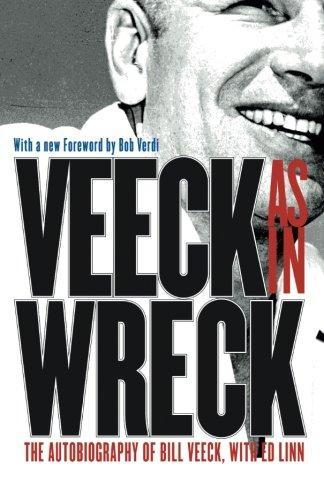
Bill Veeck was an inspired team builder, a consummate showman, and one of the greatest …
Having previously read his son Mike's autobiography, Fun is Good related to his time as owner of the St. Paul Saints, it's finally time to pick up daddy's, who spent time owning the Milwaukee Brewers, Cleveland Indians, Chicago White Sox, and St. Louis Browns. The first chapter is all about the time he put a midget up-to-bat in the big leagues.
Having previously read his son Mike's autobiography, Fun is Good related to his time as owner of the St. Paul Saints, it's finally time to pick up daddy's, who spent time owning the Milwaukee Brewers, Cleveland Indians, Chicago White Sox, and St. Louis Browns. The first chapter is all about the time he put a midget up-to-bat in the big leagues.
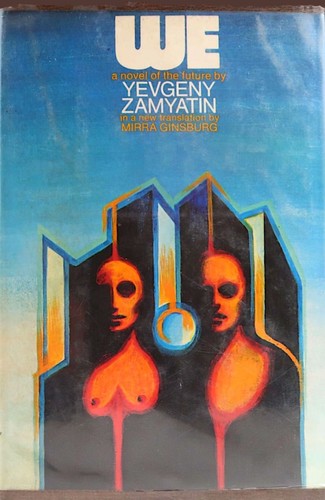
We is set in the future. D-503, a spacecraft engineer, lives in the One State, …
I liked We, or at least I didn't NOT like it. I don't know, I might not be smart enough to understand Russian literature, even translated into my native tongue. The story is fine, a brilliant mathematician doing the work to design the spaceship that will bring organization and reason to planets beyond our imagination, but in the process meets a girl, its always a girl isn't it, who introduces freedom to his life and turns the world upside down.
I guess I really didn't like the love interest, this I-330 character, particularly as our protagonist D-503 had a fine familial triangle with O and R before she showed up like the little homewrecker, she is, How I can say that in a world that everyone is everyone else's property including the sexual use of whomever you please, as long as it's within the rhythms of her cycle, …
I liked We, or at least I didn't NOT like it. I don't know, I might not be smart enough to understand Russian literature, even translated into my native tongue. The story is fine, a brilliant mathematician doing the work to design the spaceship that will bring organization and reason to planets beyond our imagination, but in the process meets a girl, its always a girl isn't it, who introduces freedom to his life and turns the world upside down.
I guess I really didn't like the love interest, this I-330 character, particularly as our protagonist D-503 had a fine familial triangle with O and R before she showed up like the little homewrecker, she is, How I can say that in a world that everyone is everyone else's property including the sexual use of whomever you please, as long as it's within the rhythms of her cycle, I don't know. But I felt O was a fine girl and I-330 never seemed to really love D-503 but was very mysterious and I guess some men go for that.
It was not a happy ending, which I never like, and I almost did not read it since the book's introduction itself told me it would not be a happy ending. I almost brought it right back to the library.
But it is told interestingly, through a bit of a diary, including several mentions like this will be the last I write to you, unknown reader followed by several more chapters when apparently not.
We is set in the future. D-503, a spacecraft engineer, lives in the One State, an urban nation constructed almost …
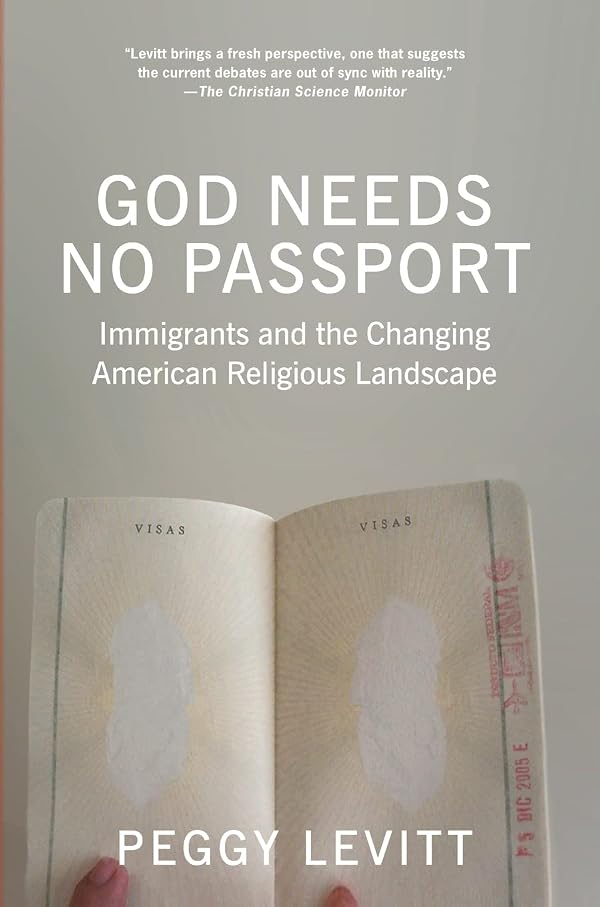
While many Americans expect that immigrants will trade in one membership card for another, God …
God Needs No Passport wasn't quite what I was expecting. I would say this book is more about transnationalism in general than the American religious landscape. Levitt uses Boston, MA as a case study for all of the United States and interviews over 200 people from four different immigrant communities India (Hindu), Pakistan (Muslim), Ireland (Catholic), & Brazil (Christian, primarily Pentecostal). She also goes through a number of native-born Americans and their position on religion, particularly of new arrivals, ranging from the evangelical anti-religious, to the as long as they are the right kind of religion, to everyone is part of our melting pot. Similarly, she finds several different groups of believers among her immigrant interviewees, the most disturbing of which I found to be the "golden rulers" who have "studied all the religions" and found them all to teach basically the same thing. Thankfully Levitt does point out that …
God Needs No Passport wasn't quite what I was expecting. I would say this book is more about transnationalism in general than the American religious landscape. Levitt uses Boston, MA as a case study for all of the United States and interviews over 200 people from four different immigrant communities India (Hindu), Pakistan (Muslim), Ireland (Catholic), & Brazil (Christian, primarily Pentecostal). She also goes through a number of native-born Americans and their position on religion, particularly of new arrivals, ranging from the evangelical anti-religious, to the as long as they are the right kind of religion, to everyone is part of our melting pot. Similarly, she finds several different groups of believers among her immigrant interviewees, the most disturbing of which I found to be the "golden rulers" who have "studied all the religions" and found them all to teach basically the same thing. Thankfully Levitt does point out that these folks haven't actually studied any religion, but since none of them seem to specifically say to be mean to everyone, then they are all teaching to be nice to everyone. All of these different people with all of their similar names made it kind of hard for me to keep track. For a while I kept flipping back to the beginning to check who was who but eventually, I gave up and decided it wasn't that important. This book was written in 2007 and has very much a post-9/11-feel with an uncomfortable amount of emphasis on international terrorism and some people's attempts at blaming religion for such. All-in-all it kept me longing for more, so the pages kept turning, but I never quit got filled.