Jim Fulner wants to read The dispossessed by Ursula K. Le Guin
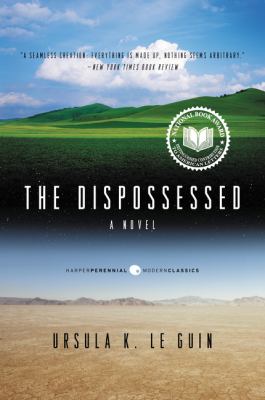
Shevek, a brilliant physicist from the anarchist moon Anarres, risks his life by traveling to …
Recommended by @seanderson13@bookwyrm.social

I'm think I got this bookwyrm thing right. I ended up more-or-less manually importing ~1,000 books. I'm sure there is supposed to be any easier way.
I previously had accounts @fu@bookwyrm.social @fu@millefeuilles.cloud and @fu@bookwyrm.world, I think this one will be here to stay but I might need to find a less expensive hosting solution.
You can find my Pleroma account @hey@r.jimfulner.com
This link opens in a pop-up window
Shevek, a brilliant physicist from the anarchist moon Anarres, risks his life by traveling to …
Recommended by @seanderson13@bookwyrm.social
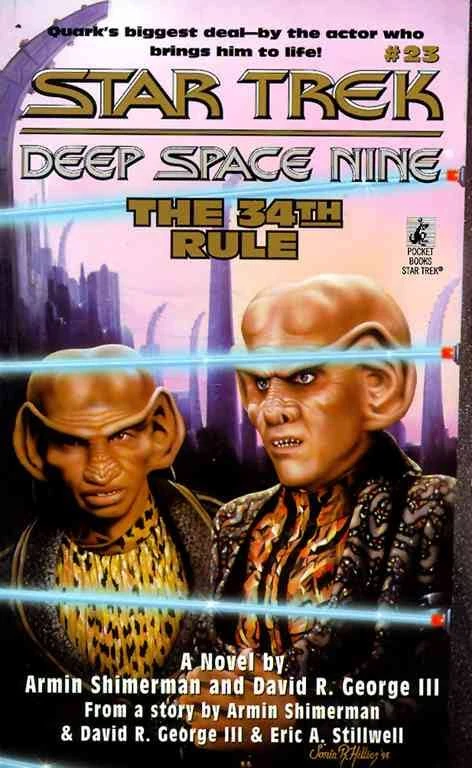
For once, business is going well for Quark, not that anyone on Deep Space 9 …
It was a fine book but itdidn't really work out the way that I had expected to. I think it would have been much better as a standalone story. However with its intention of acting within the middle of the Star Trek deep space nine television series it didn't really flow for me. I don't think that Quark and the rest of the Ferengis could have gone on living the same way they did on the television series if they had been banned from Bajoran space at some time in the recent past. It would still be too many hard feelings, in my opinion ,to have continued living as nothing had changed. Otherwise the little to the point that it's like it was something that should have been a bigger deal than it was I don't know how this actually met with the finding of the 9th orb but if …
It was a fine book but itdidn't really work out the way that I had expected to. I think it would have been much better as a standalone story. However with its intention of acting within the middle of the Star Trek deep space nine television series it didn't really flow for me. I don't think that Quark and the rest of the Ferengis could have gone on living the same way they did on the television series if they had been banned from Bajoran space at some time in the recent past. It would still be too many hard feelings, in my opinion ,to have continued living as nothing had changed. Otherwise the little to the point that it's like it was something that should have been a bigger deal than it was I don't know how this actually met with the finding of the 9th orb but if we pretend it's in its own universe it's a good story with the ferengis being treated almost like the Japanese-Americans during the world war II encampment one of the few times we see racism thoroughly addressed within the Star Trek universe.
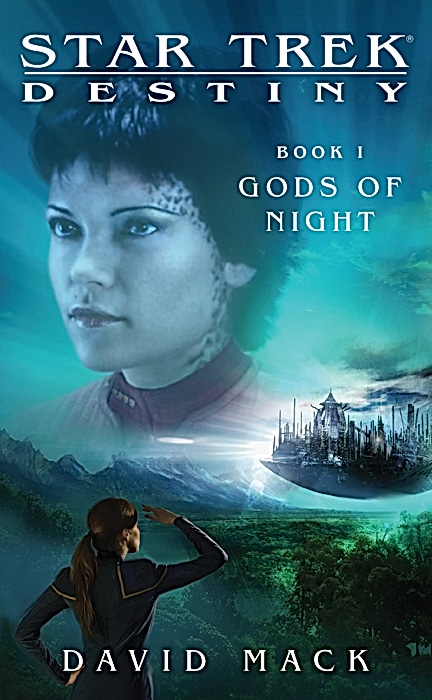
Half a decade after the Dominion War and more than a year after the rise …
put in an interlibrary loan request
Written by a nationally known, respected commentator, Masters of the Dream is an insightful and …
Close as I could find to a biography on Alan Keyes.

The only way to undo racism is to consistently identify and describe it—and then dismantle …
Mrs. Fulner got all mad when she saw this title sitting on the counter because she thought it said "how to be an antichrist" lol!
Mrs. Fulner got all mad when she saw this title sitting on the counter because she thought it said "how to be an antichrist" lol!
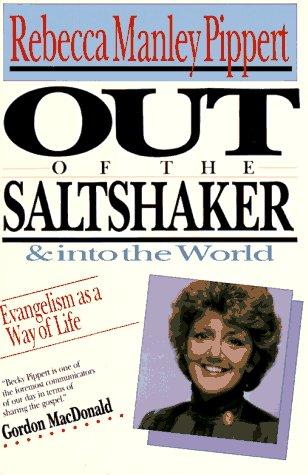
Christian and non-Christians have something in common,' writes Rebecca Pippert. 'We're both uptight about evangelism.' …
Quoted in Conspiracy of Kindness
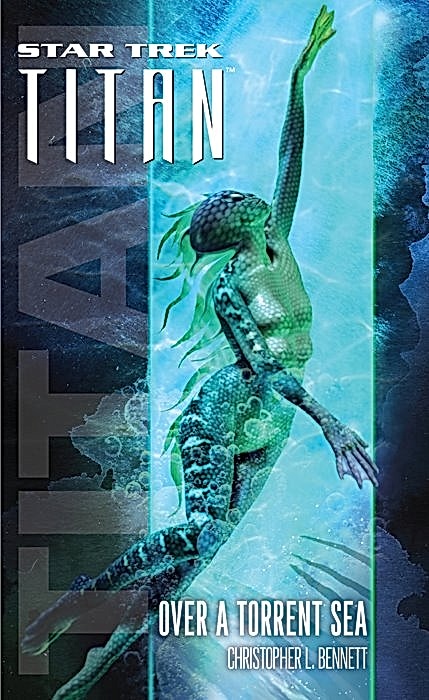
As the Federation recovers from the devastating events of Star Trek: Destiny, Captain William Riker …
Over a Torrent Sea was different from most Star Trek books. It was much more "hard science fiction" than we have come to expect from Star Trek. While TNG has been described as "board meetings in space" this fifth book in the Star Trek: Titan series had a whole bunch of new scientific concepts found on the planet Droplet the Titan just "discovered."
Much of the beginning of the book revolves around whether there is any sentient life on this ocean planet where there is no actual land masses. That in and of itself deals with a bunch of different theory about how things like weather and sea currents etc. word work on a truly ocean-based planet.
Eventually they determine that not only is there, at least one, sentient species, but it is actually much more advanced in a way that humans, or other humanoids of the federation, …
Over a Torrent Sea was different from most Star Trek books. It was much more "hard science fiction" than we have come to expect from Star Trek. While TNG has been described as "board meetings in space" this fifth book in the Star Trek: Titan series had a whole bunch of new scientific concepts found on the planet Droplet the Titan just "discovered."
Much of the beginning of the book revolves around whether there is any sentient life on this ocean planet where there is no actual land masses. That in and of itself deals with a bunch of different theory about how things like weather and sea currents etc. word work on a truly ocean-based planet.
Eventually they determine that not only is there, at least one, sentient species, but it is actually much more advanced in a way that humans, or other humanoids of the federation, have seen in their use of biotechnology to have achieved their advancement. They've never seen anything that isn't alive before so the Titan's tech scares them and defines much of the story.
The most character development we get is from Ensign Aili Lavena, featured on the cover of the first Pocketbooks edition, whose aquatic lifestyle now makes her the one who for once isn't a fish-out-of-water on this new planet, particularly her native Selkie song language which is much better for communication here.
A giant asteroid appears and as usual Federation officers break the prime directive and calamity ensues.
If you like that kind of stuff Over a Torrent Sea is all-in-all pretty self-contained with most relevant information from earlier books spelled out. That being said, if you are a completionist I wouldn't recommend reading this right after book 4. It wasn't communicated in the previous book, but there was another story that takes place after Sword of Damocles in the Star Trek: Destiny series that greatly effects the overarching story line including: changes in characters & universe (or at least quadrant-wide) upheavals. I will take a break on Star Trek: Titan and start at that next and see what is really relevant, though I know much of it may be spoiled by reading this first. 🤷♀️🤷♀️🤷♀️🤷♀️

A STEM and social-emotional learning picture book that teaches teamwork through real pollination science—perfect for …
Won as an Early Reviewers Give-a-way from LibraryThing
As the Federation recovers from the devastating events of Star Trek: Destiny, Captain William Riker and the crew of the …
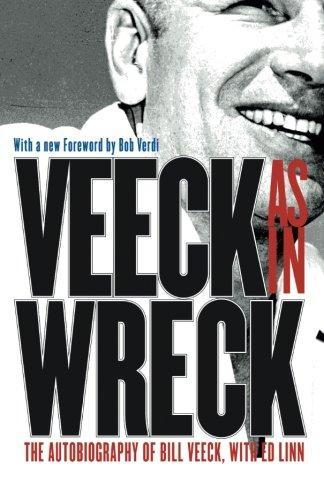
Bill Veeck was an inspired team builder, a consummate showman, and one of the greatest …
I really really liked Veeck as in Wreck. Autobiographies can sometimes be all over the place between what some people want to know and what others want you to know. Veeck tries to get a balance here, for example by making chapter 1 not about the beginning of his life, but of the story he knows everyone wants to hear, how he got a midget to bat for the St. Louis Browns.
He moves on to tell the story of his life focusing on his adventures as an owner/operator of a number of major and minor league teams over the year. Professional sports has often been a hobby for many rich people, sometimes a tax write-off for the big boys. Bill was the son of a newspaper writer and arguably the last man not independently wealthy to own a major league baseball team, financed by a bunch of …
I really really liked Veeck as in Wreck. Autobiographies can sometimes be all over the place between what some people want to know and what others want you to know. Veeck tries to get a balance here, for example by making chapter 1 not about the beginning of his life, but of the story he knows everyone wants to hear, how he got a midget to bat for the St. Louis Browns.
He moves on to tell the story of his life focusing on his adventures as an owner/operator of a number of major and minor league teams over the year. Professional sports has often been a hobby for many rich people, sometimes a tax write-off for the big boys. Bill was the son of a newspaper writer and arguably the last man not independently wealthy to own a major league baseball team, financed by a bunch of arguably shady loans.
As such Veeck HAD to make money at baseball or the whole thing would fall apart, bringing in tons of zany promotions from door prizes of a flock of chickens, a herd of cows, or giving one fan 1,000 cans of beer (always more impressive than giving 1 can of beer to 1,000 fans). He needed to learn what people wanted, so he had to talk to people. Giving 100s of speeches a year to Rotary Clubs, Odd Fellows and the like, never sitting in the luxury box but instead sitting in each section a half-inning at a time to talk to the fans.
It made me jealous of mid-20th century baseball fans. The idea of showing up to the ballpark wearing a dress gives you a free ticket and a free flower on ladies' day just can't be done in early 21st century.
So many things Veeck was promoting then as baseball needing to do, it is now doing, like interleague play, pitch clock, unrestricted draft and expansion. The one thing he said was inevitable that hasn't occurred, and I don't think will, is American universities becoming year-round institutions (they offer summer classes but that's not the same) and college baseball becoming the summer highlight of the NCAA growing to replace the minor leagues as the primary birthplace of major league stars.
His antiracism is surprising for a man of his time: firing whites wouldn't shake the hand of a new black player in Cleveland; not to mention his attempt at buying the Phillies—before Jackie Robinson broke the color barrier—with an intent to replace its players with a team of Negro League all-stars, stifled by the National League buying up the team while he was on the train to Philadelphia.
I didn't give it the full 5 stars because a bit of it is too hard to believe, not so much the antics and the negro league story some people think he made up, but remembering the exact dollar amounts for every contract he sold from the minor leagues? I don't see him keeping records to that degree nor having that kind of memory.
For whatever reason I felt like he WANTED to write more about his family but felt that the fans wanted to hear more about baseball. While in the end it mentions that he had had five kids the last details we got on them was his oldest son Mike, the only one I'm aware of who followed him into the baseball world, was playing in his play pen in their St. Louis stadium apartment so he could watch the game without crawling away.
Recommended for sports fans and may be of interest for business folks.
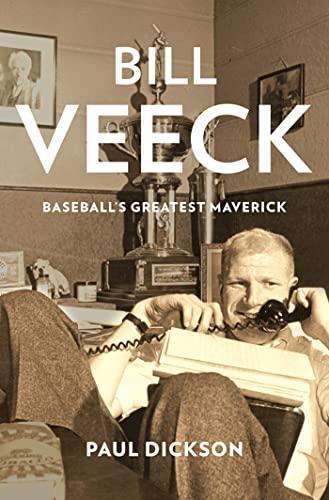
William Louis "Bill" Veeck, Jr. (1914-1986) is legendary in many ways-baseball impresario and innovator, independent …
Veeck—As in Wreck told me what Veeck thought of himself. Let's see what others thought of him.
Veeck—As in Wreck told me what Veeck thought of himself. Let's see what others thought of him.
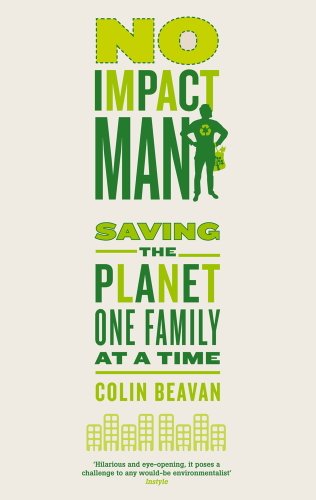
In the growing debate over eco-friendly living, it seems that everything is as bad as …
LibraryThing recommendation based on The Year of Living Biblically.

Jump right into this hilarious new book on enjoying and celebrating Catholicism in a whole …
LibraryThing recommendation for The Screwtape Letters.
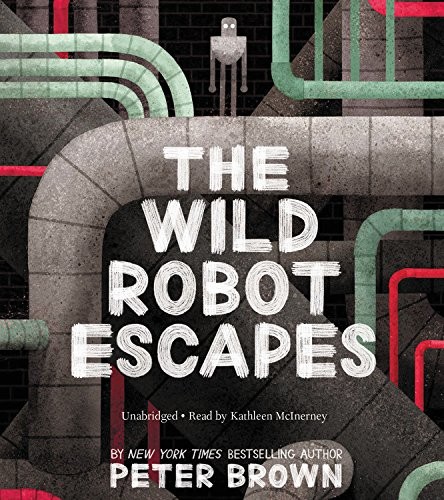
After being captured by the Recons and returned to civilization for reprogramming, Roz is sent …
on hold at the libary

A memoir from one of The Voice of Wrestling, during WWE's most successful and turbulent times. Jim Ross was front …